

How to Choose Natural Energy Supplements for Professionals
- by Tyler Mason
-

Last Updated: November 11, 2026
Quick Summary
Natural energy supplements for professionals support the body's own ATP production instead of overriding it with stimulants. Choose stimulant-free, third-party tested products with full nutrient disclosure, and take phytoplankton on an empty stomach earlier in the day. Fix sleep, meals and hydration first, since supplements mainly correct genuine gaps.
- Vitamins for energy work only where a genuine deficiency exists, so get a blood panel first.
- Take phytoplankton on an empty stomach earlier in the day, with the last serving at least six hours before bed.
- Check for full nutrient disclosure, third-party heavy metal testing and a clear allergen statement before buying.
- Iron and magnesium can interfere with thyroid medication and some antibiotics, so ask a pharmacist first.
- Stacking multiple stimulant products masks fatigue while making it worse.
Table of Contents
- Why Workday Energy Fails and What Supplements Can Fix
- Marine Phytoplankton Benefits for Energy at the Cellular Level
- Vitamins for Energy and Tiredness: What the Evidence Actually Shows
- How to Improve Cellular Energy Levels Without Overstimulation
- Dosing, Timing, and Safety: What Busy Professionals Should Check
- Choosing a Natural Energy Supplement That Fits Your Workday
- Frequently Asked Questions
Why Workday Energy Fails and What Supplements Can Fix
Most professionals don't have an energy problem at 9 a.m. They have one at 2:30 p.m., when the third coffee stops working and the spreadsheet starts blurring. That afternoon crash is usually not a caffeine deficit. It's a cellular one.
Natural energy supplements for professionals are products built to support the body's own energy production rather than override it with stimulants. This guide from Global Phytoplankton walks through what the evidence supports, what to skip, and how to dose without wrecking your sleep.

The mechanism matters here. For a deeper look at mitochondrial support, read why Microchloropsis phytoplankton is the ultimate mitochondrial superfood. Cells convert food into adenosine triphosphate, or ATP, the molecule every muscle contraction and thought runs on. When nutrient intake is thin or oxidative stress runs high, ATP output drops and fatigue shows up long before the workday ends. A Harvard Health overview of energy and fatigue makes the same point: persistent tiredness usually has a cause worth identifying, not just a stimulant worth adding.
Common non-supplement culprits deserve a check first:
- Sleep debt accumulated across the week
- Skipped meals or protein-poor lunches
- Dehydration masked by coffee
- Extended sitting with no movement breaks
Fix those and some fatigue disappears. What remains is where targeted nutrition earns its place.
Marine Phytoplankton Benefits for Energy at the Cellular Level
Marine phytoplankton is a single-celled marine microalgae consumed as a whole-food supplement, valued for its broad nutrient profile rather than any single isolated compound. The National Institutes of Health Office of Dietary Supplements notes that whole-food sources often deliver nutrients in combinations that isolated pills do not replicate.
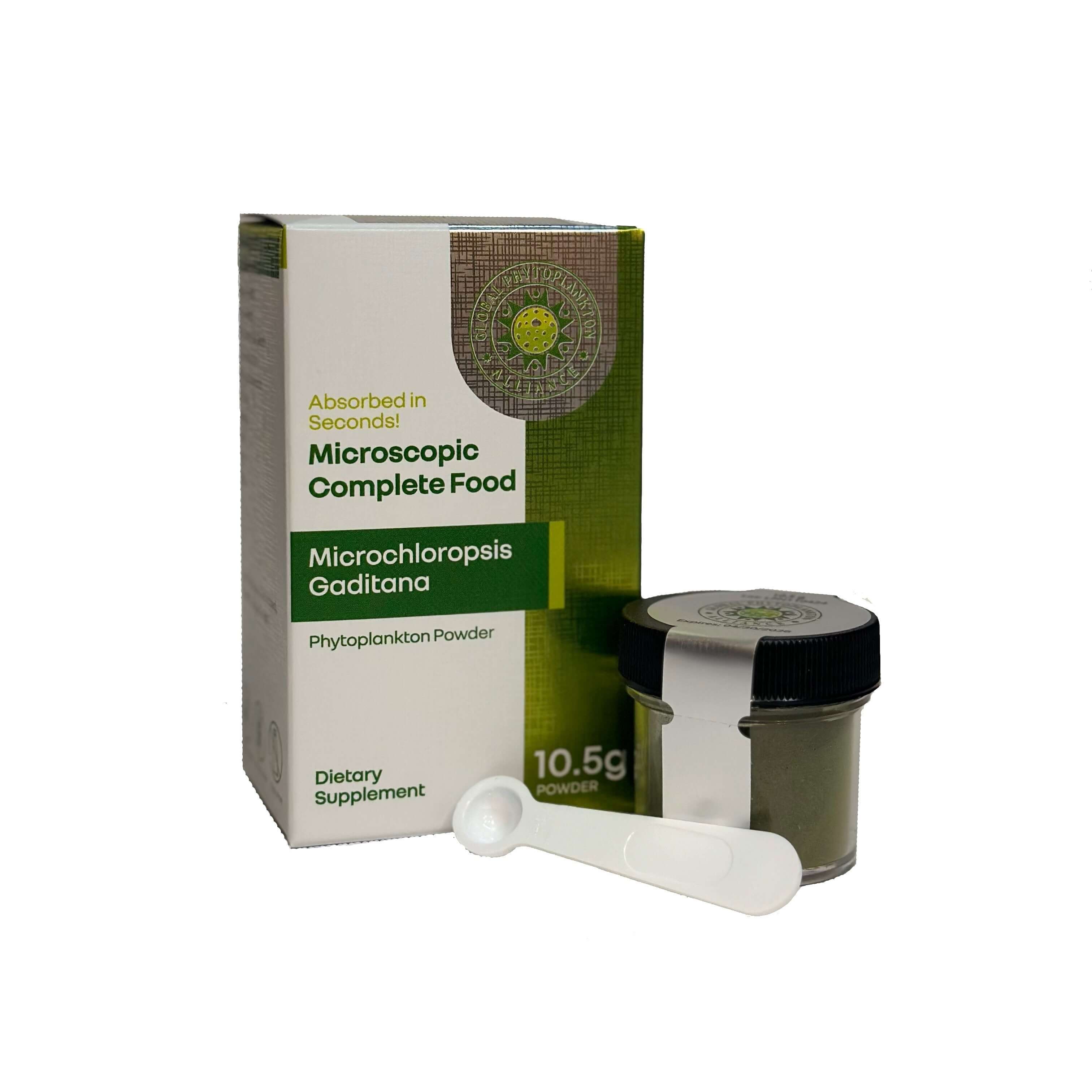
That breadth is the appeal. The Microchloropsis Gaditana listing includes omega-3, 6 and 9 fatty acids, B-complex, iron, magnesium, zinc, and antioxidants such as astaxanthin in one product. For a busy professional, that means fewer bottles on the counter and less guesswork about stacking.
Our Microchloropsis Gaditana marine phytoplankton supplement is a 350mg serving, taken one to four scoops daily, depending on individual needs, on an empty stomach.
Vitamins for Energy and Tiredness: What the Evidence Actually Shows
Vitamins for energy and tiredness work only where a genuine deficiency exists. That's the part most supplement marketing glosses over. If your levels are already normal, adding more B12 or vitamin D rarely produces a noticeable lift.
Here's how the main players actually function:
| Nutrient | Role in Energy | Best For | Watch Out |
|---|---|---|---|
| B vitamins | Help convert food into usable energy | Restricted diets, low intake | No benefit if levels are normal |
| Vitamin B12 | Supports red blood cells and nerve function | Vegans and vegetarians | Deficiency needs testing first |
| Vitamin D | Influences muscle function and mood | Low-sunlight climates | Fat-soluble, so dose carefully |
| Iron | Carries oxygen through the blood | Confirmed deficiency only | Excess iron is harmful |
| Magnesium | Involved in ATP production | Poor sleep, muscle cramps | Can interact with medication |
The pattern is consistent: these nutrients support metabolism, and they correct gaps. They don't manufacture energy from nothing.
A practical rule is to get a blood panel before buying a single-nutrient supplement, since it shows where a gap actually sits. Broad-spectrum whole-food options may suit people who suspect several small gaps rather than one clear deficiency.
How to Improve Cellular Energy Levels Without Overstimulation
How to improve cellular energy levels comes down to supporting mitochondria, the structures inside cells that produce ATP, while keeping stimulant load low. Caffeine borrows energy against tomorrow. Nutrient support builds the account.
For professionals, the goal is not a workout boost, it is sustained concentration across a long workday of meetings, screen time, and desk-based routines. That changes the levers that matter. Three do most of the work:
- Feed the mitochondria. B vitamins, magnesium, and CoQ10 all participate in energy production pathways. CoQ10 in particular sits in the electron transport chain, the final step of ATP production, and levels can decline with age and certain medications.
- Reduce oxidative stress. Antioxidants protect mitochondria from damage that blunts output over time. This is damage control that compounds, not a quick fix.
- Protect sleep and movement. Any supplement taken late in the day that interferes with rest defeats its own purpose. Short movement breaks also support circulation and alertness in ways no pill replaces.
A fourth lever specific to desk work is blood sugar steadiness. A protein-poor lunch or a skipped meal produces an afternoon crash that looks like a supplement problem but is really a meal-timing problem. Fix the lunch before buying a bottle.
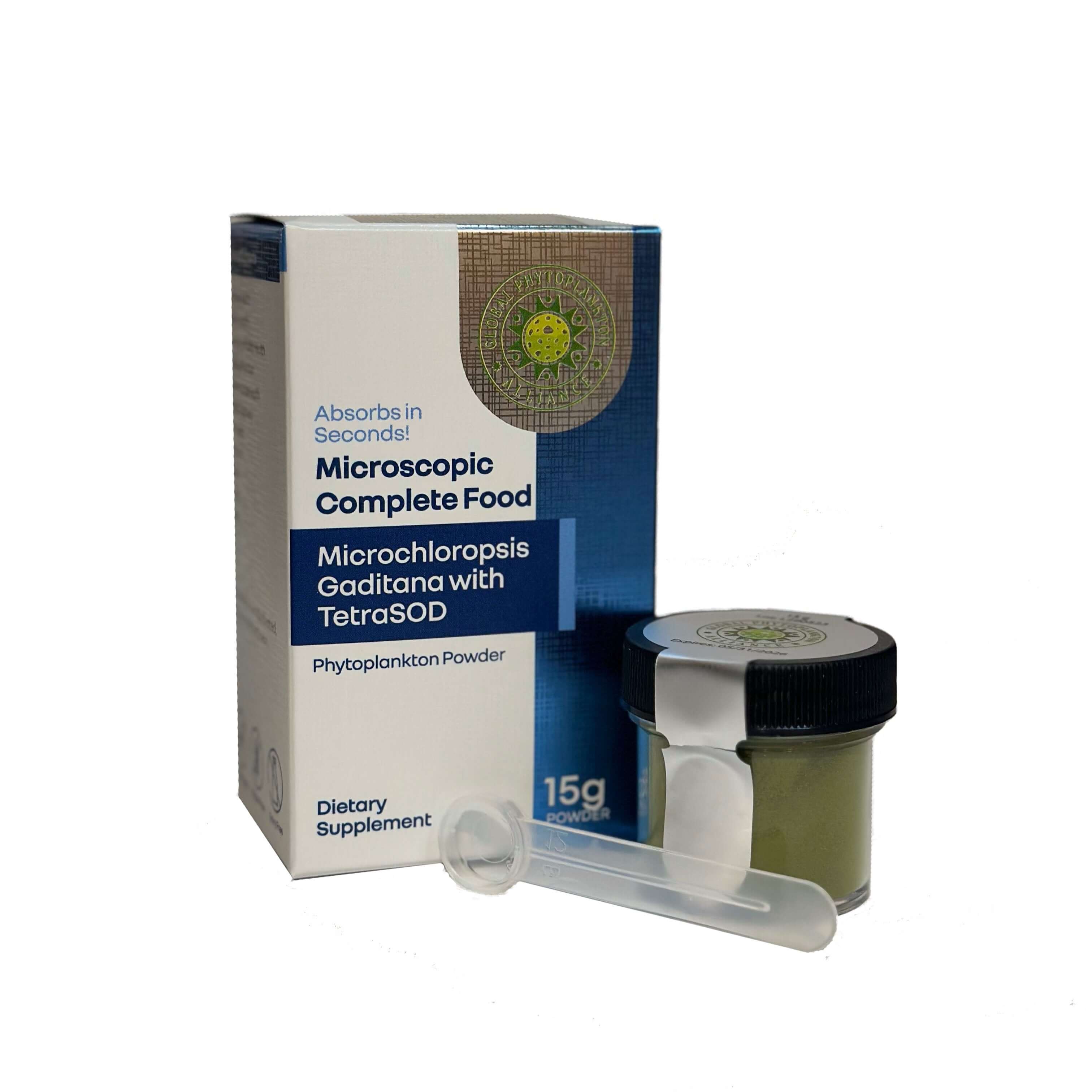
Our Microchloropsis Gaditana with TetraSOD pairs the base phytoplankton nutrition with TetraSOD, an antioxidant derived from superoxide dismutase.
Watch out: stacking multiple stimulant-based products alongside a natural supplement is the fastest way to mask fatigue while making it worse. If you need a second coffee to function by mid-morning, that is a signal to investigate causes, not to add another scoop. Persistent fatigue can also point to a medical cause such as thyroid issues or anemia, which warrants evaluation rather than more supplements.
Dosing, Timing, and Safety: What Busy Professionals Should Check
Dosing and timing decide whether a supplement works or gets wasted. Phytoplankton is best taken on an empty stomach, mixed with water, earlier in the day. Serving sizes run from 350mg to 500mg depending on the product, with one to four scoops daily based on individual need.
Timing matters for two reasons. First, many B vitamins and cofactors are water-soluble and better absorbed away from a heavy meal. Second, taking a stimulant-free supplement earlier in the day avoids any chance of it interfering with sleep, which is the foundation of workday energy. A common pattern is to take it with water before breakfast or mid-morning, and to keep the last serving at least six hours before bed.
Duration is where expectations often go wrong.
Safety points worth checking before you start:
- Medication interactions. Iron and magnesium can interfere with certain prescriptions, including thyroid medication and some antibiotics. Ask a pharmacist before combining.
- Pregnancy and health conditions. Get professional clearance first, especially if you are managing a chronic condition or taking multiple medications.
- Allergen verification. Confirm gluten-free status on the certificate of analysis, not just the label.
- Stacking. Combining multiple products with overlapping nutrients can push some vitamins and minerals past safe upper limits. Check total daily intake, not just one label.
Watch out: more is not better with fat-soluble vitamins and iron. Vitamin D and iron in particular can accumulate, and excess iron is harmful. If you are already taking a multivitamin, add up the totals before adding another product.
For step-by-step guidance, our Chief Wellness Officer Dr. Lana Kontos explains how to take phytoplankton in detail, including mixing and timing.
Realistic expectations matter. Most people notice subtle shifts in afternoon steadiness before anything dramatic. The strongest evidence for any energy supplement is in correcting a deficiency or filling a specific gap, not in producing a lift when levels are already normal. That is the honest frame to bring to any product, including ours.
Choosing a Natural Energy Supplement That Fits Your Workday
Choosing well comes down to label quality, not marketing claims. Look for full nutrient disclosure, third-party testing for heavy metals, a clear allergen statement, and a form your body can absorb.
A quick checklist to run before buying:
- Does the label list complete nutrition, or hide behind a "proprietary blend"?
- Is there a certificate of analysis available on request?
- Is the product free of gluten and common allergens?
- Does the dosing fit your routine, or will you forget it by Wednesday?
- Is it stimulant-free, so it won't disturb sleep?
For professionals, the best natural energy supplements are the boring ones: consistent, well-tested, and easy to take daily. Our Microchloropsis Gaditana line is grown in Cádiz, Spain, and is a raw, vegan formulation. If you're unsure which product fits your needs, our team is happy to help you contact our expert customer service team.
The real challenge isn't finding another stimulant. It's rebuilding steady cellular energy while your calendar stays full. Global Phytoplankton makes that simpler with 100% raw, vegan whole-food phytoplankton, cultivated in pharmaceutical-grade facilities and instantly bioavailable at the cellular level. Start with the base Microchloropsis Gaditana, or add TetraSOD if oxidative stress is your bottleneck. Get started with Global Phytoplankton and give your workday energy a foundation that doesn't crash at 2:30.
Frequently Asked Questions
Do natural energy supplements really help with professional burnout?
They can help with the nutrient side of fatigue, not the workload side. If your tiredness comes from low iron, low vitamin D, or poor cellular energy production, correcting those gaps can improve how you feel. Burnout itself needs changes to workload, sleep, and boundaries. Treat natural energy supplements as one part of the picture, and check with a healthcare practitioner before starting anything new, especially if you take medication.
Are there side effects to taking natural energy supplements daily?
It depends on the nutrient and the dose. Iron can cause constipation and should only be taken when a deficiency is confirmed. High-dose B vitamins are usually excreted but can upset digestion. Herbal options like ashwagandha and ginseng can interact with thyroid, blood pressure, and sedative medications. Whole-food options such as marine phytoplankton are generally well tolerated at label doses. Review any daily supplement with your practitioner if you take prescription medication.
How does marine phytoplankton support cellular energy for busy professionals?
Marine phytoplankton delivers a broad mix of B vitamins, iron, magnesium, and omega-3 fatty acids, the nutrients your mitochondria need to convert food into usable energy. It also supplies antioxidants such as astaxanthin and chlorophyll. For professionals, the appeal is a single whole-food source rather than a shelf of separate bottles. Take it on an empty stomach, mixed with water.
Can natural supplements replace coffee for professional productivity?
Not directly. Caffeine blocks sleepiness signals for a few hours; supplements address nutrient gaps that affect energy production over weeks. Many professionals use both: a modest coffee in the morning and a nutrient-focused supplement daily. If you want to cut caffeine, taper slowly and lean on sleep, hydration, and a supplement that supports cellular energy rather than stimulants.
