

The Complete Guide to Benefits of Whole Food Supplements
- by Tyler Mason
-

Last Updated: November 12, 2026
Quick Summary
Whole food supplements deliver nutrients inside a natural food matrix, the structure of proteins, fats, and plant compounds that surrounds each vitamin and mineral. This matrix carries phytochemicals, enzymes, and trace minerals alongside the headline nutrient, which synthetic isolates do not. They fill nutrient gaps but cannot replace a healthy diet.
- Whole food supplements are made from concentrated real foods such as algae, grasses, or plant powders, not isolated lab compounds.
- Vitamins A, D, E, and K need dietary fat to be absorbed efficiently, so a food source carrying fats may support that step.
- NHS guidance recommends vegans pay attention to vitamin B12, vitamin D, and omega-3 fatty acids on a plant-based diet.
- Check four things when buying: source water and growing method, exact strains, country of manufacture, and whether the price is suspiciously low.
- Whole food supplements cannot replace a healthy diet; they only bridge gaps that dietary planning leaves.
Table of Contents
- What Whole Food Supplements Actually Are
- Whole Food Supplements vs Synthetic Vitamins
- Nutrient Absorption and Bioavailability
- The Benefits of Whole Food Multivitamins
- Whole Food Supplements for Energy
- How to Choose Whole Food Supplements
- Safety, Interactions, and Upper Intake Limits
- Can Whole Food Supplements Replace a Healthy Diet?
- Choosing a Whole Food Supplement That Fits Your Routine
- Frequently Asked Questions
What Whole Food Supplements Actually Are
Whole food supplements are products made from concentrated real foods, such as algae, grasses, or plant powders, rather than isolated laboratory compounds. The benefits of whole food supplements come from delivering nutrients inside a food matrix, the natural structure of proteins, fats, and plant compounds that surrounds each vitamin and mineral.
Marine phytoplankton can be grown as a single whole food, which is why the distinction matters. A nutrient is never just a chemical name. Iron in a plant cell behaves differently from iron in a tablet, because the surrounding compounds change how the body handles it. Harvard T.H. Chan School of Public Health on vitamins and supplements notes that nutrients work as part of a team, not in isolation.
Whole-Food-Based Versus Synthetic Nutrients
Whole-food-based nutrients are extracted from a plant or algae source and keep much of that source's natural cofactors. Synthetic nutrients are manufactured in a lab from isolated compounds, then pressed into a capsule. Both can supply essential nutrients, but they are not identical.
The key difference is the food matrix. A whole food source carries phytochemicals, enzymes, and trace minerals alongside the headline nutrient. Synthetic versions deliver the headline nutrient alone. That does not make synthetics useless, but it does mean the body is receiving a different package.
Whole Food Supplements vs Synthetic Vitamins
Whole food supplements vs synthetic vitamins is the comparison most shoppers ask about, and the honest answer is that both have a place. Whole food supplements may suit people who want nutrients in their natural form. Synthetic vitamins can be used for targeted, single-nutrient correction.
Here is how the two compare on the criteria that matter:
| Criterion | Whole Food Supplements | Synthetic Vitamins |
|---|---|---|
| Source | Algae, plants, grasses | Lab-manufactured compounds |
| Nutrient form | Food matrix with cofactors | Isolated compounds |
| Absorption | Often supported by natural cofactors | Depends on the specific form |
| Cost | Higher | Lower |
| Label transparency | Varies widely by brand | Varies widely by brand |
What most guides miss is that "natural" and "whole food" are not regulated guarantees of quality. The terms are used inconsistently across the category, so two products with similar front-of-label claims can be very different inside the bottle. A useful way to read the label is to separate three things: the nutrient form, the source ingredient, and the dose.
First, check the nutrient form. A label that lists a vitamin by its chemical name, such as ascorbic acid or dl-alpha-tocopheryl acetate, is describing an isolated compound. A label that lists a food ingredient, such as a named algae or grass powder, is describing a source. Some products combine both approaches, which is why the ingredient list matters more than the marketing copy.
Second, check whether the food ingredient is a meaningful part of the formula or a token amount. A common pattern is a long list of fruit and vegetable powders at the bottom of the label, after the isolated vitamins, which usually means the food portion is small relative to the headline nutrients. Look at where the food ingredient sits in the list and whether the label states how much of it is included.
Third, check the dose against the nutrient reference value. A whole food source can be a genuine source of nutrients without matching the dose of a targeted synthetic product, and that is not automatically a problem. It becomes a problem when the label implies a therapeutic dose that the food ingredient cannot realistically supply.
Watch out: a product can be labeled "food-based" while most of its vitamin content comes from added isolates, because the food ingredient is used as a carrier or flavor rather than the main nutrient source. If the label does not make the distinction clear, ask the manufacturer which nutrients come from the food ingredient and which are added.
What most guides also miss is that the evidence for whole food supplements is not the same as the evidence for eating whole foods. Studies on diets rich in vegetables, fruits, and algae describe health associations from food patterns, not from capsules. Evidence specific to a whole food supplement depends on the product, its dose, and the outcome tested, and that evidence is usually thinner. That does not make food-based products inferior, but it does mean the claim should match the study. A brand that cites research on eating broccoli to sell a broccoli capsule is stretching the evidence.
What most guides miss is that "natural" on a label is not a regulated guarantee of quality. A whole food supplement is only as good as its sourcing and how it is grown.
Nutrient Absorption and Bioavailability
Bioavailability is the proportion of a nutrient your body actually absorbs and uses from what you swallow. Some people find that nutrients taken with the fats, proteins, and plant compounds found in food are used differently, though the effect varies by nutrient and by person.
The mechanism is easiest to see with fat-soluble vitamins. Vitamins A, D, E, and K need dietary fat to be absorbed efficiently, because they are packaged into micelles in the small intestine before they can cross into the bloodstream. A food source that naturally carries fats alongside those vitamins may support that step.
Minerals behave differently. Iron is a good example: heme iron from animal foods is absorbed more efficiently than non-heme iron from plants, and non-heme iron absorption is improved by vitamin C eaten in the same meal and reduced by compounds such as phytates in whole grains and polyphenols in tea and coffee. Calcium and iron compete for some of the same absorption pathways, so taking a large calcium dose with an iron-rich meal can reduce iron uptake. Zinc and copper also interact, which is why long-term high-dose zinc without copper can affect copper status.
Whole food sources carry these nutrients together with the compounds that normally accompany them in food, which is part of the appeal. A plant or algae source may supply iron alongside vitamin C and other cofactors, for example, rather than as an isolated mineral salt. That does not guarantee better absorption in every case, but it is a different package than a single isolated compound.
Absorption also depends on your digestive system. Stomach acid, pancreatic enzymes, and the health of the gut lining all affect how well nutrients are released and taken up. People who take acid-reducing medication, have had bariatric surgery, or have conditions affecting fat absorption may absorb some nutrients less efficiently, and a clinician can advise on forms and timing.
Watch out: taking a large dose of a single isolated mineral alongside a meal rich in competing minerals can reduce how much of each you absorb. Spacing matters, and so does reading the total dose across every product you take, not just one.
A practical way to think about bioavailability is to ask three questions. What form is the nutrient in? What else is in the product or the meal with it? And does the dose match what the evidence supports? A food-based nutrient with a modest dose can be a sensible daily source, while a high-dose isolated nutrient may be the right choice for a specific, clinician-guided correction. The label should let you answer those questions, and if it does not, that is a signal about the product's transparency.
The Benefits of Whole Food Multivitamins
The benefits of whole food multivitamins center on nutrient synergy: the way vitamins and minerals support each other inside a food matrix. A whole food multivitamin supplies essential nutrients together, the way they appear in food, rather than as a list of isolated pills.
For vegan adults, this matters. Plant-based diets can be lower in certain nutrients unless they are planned carefully. NHS guidance on vitamins for vegans recommends paying attention to vitamin B12, vitamin D, and omega-3 fatty acids on a plant-based diet. A whole food source can help fill those gaps without relying on synthetic isolates.
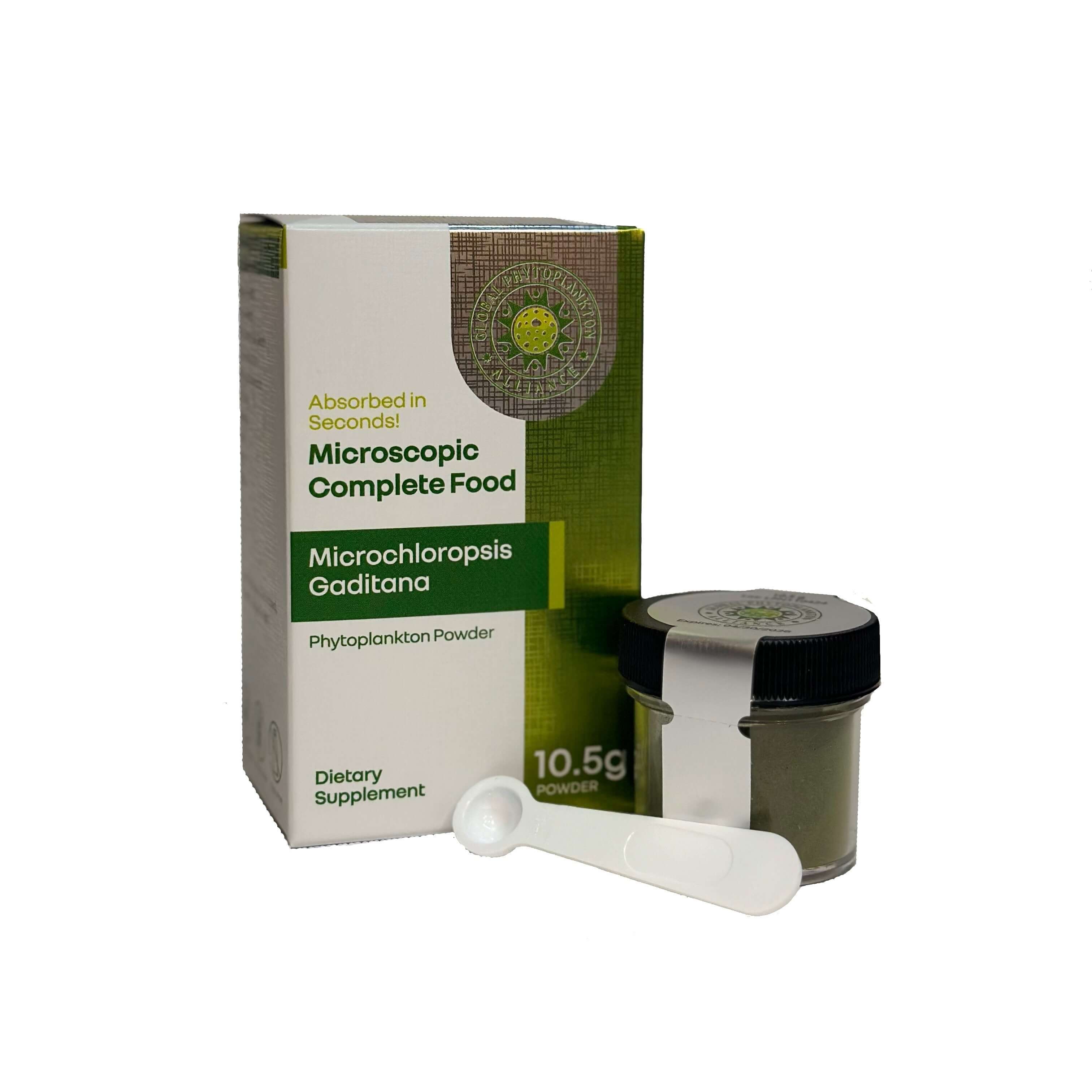
Phytoplankton sits at the base of the marine food web. Our Microchloropsis Gaditana marine phytoplankton supplement contains omega-3, 6, and 9 fatty acids, complete protein with all essential amino acids, and a range of vitamins and minerals.
Whole Food Supplements for Energy
Whole food supplements may support the nutrient intake the body uses to produce energy. If fatigue or brain fog stems from a nutrient gap, closing that gap can help. If it stems from poor sleep or an underlying condition, no supplement will fix it.
Some buyers report feeling better once they get source nutrients they were missing. Expect support, not a jolt.
A common mistake is expecting a whole food supplement to replace sleep, dietary planning, or medical care. It will not. It supports a balanced diet, it does not substitute for one.
How to Choose Whole Food Supplements
Choosing whole food supplements comes down to four checks: the source water and growing method, whether the producer knows the exact strains in the product, where it is manufactured, and whether the price is suspiciously low for a high-end ingredient.

Global Phytoplankton grows its marine phytoplankton in a pharmaceutical-grade facility in Cádiz, Spain. Price can be a signal too: phytoplankton is a high-end ingredient.
Reading the Label and Sourcing
Start with the source. Does the label tell you where the ingredient was grown and in what kind of water?
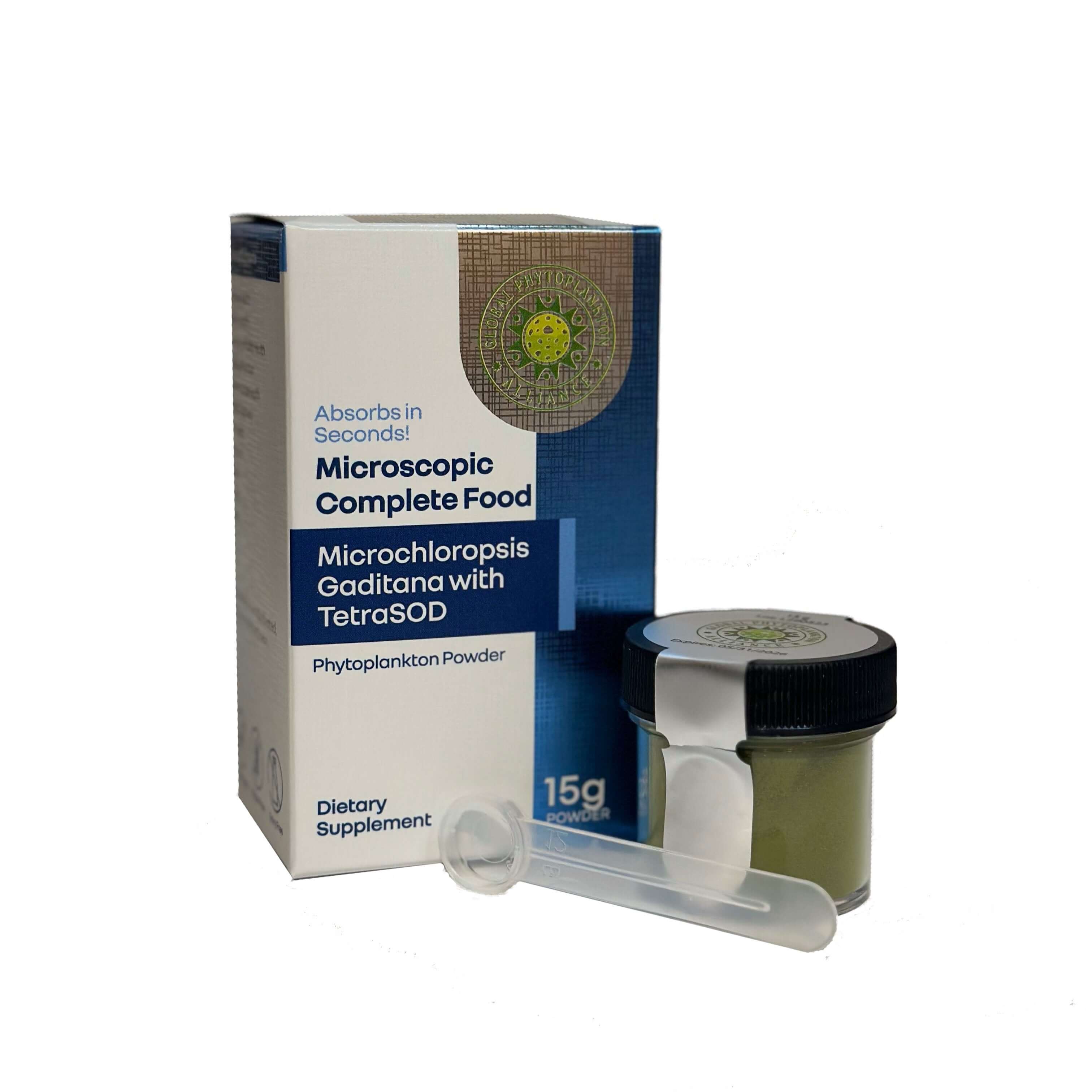
Then check the strains. A producer who cannot name the exact strains in the jar is guessing. Finally, check the country of manufacture and look for third-party testing on purity and heavy metals. Our Microchloropsis Gaditana with TetraSOD supplement is enhanced with TetraSOD for antioxidant support.
Safety, Interactions, and Upper Intake Limits
Whole food supplements are generally well tolerated, but "natural" does not mean "no limits." Every nutrient has an upper intake level, and exceeding it over time can cause problems. Fat-soluble vitamins such as A and D accumulate in the body, so more is not better.
Interactions matter too. Some supplements affect how prescription medications are absorbed, and certain minerals compete with each other. If you take medication, have a medical condition, or are pregnant, speak to your doctor or a registered dietitian before adding any dietary supplement. This is not a disclaimer to skip past; it is the single most important safety step.
Watch out: doubling up on multivitamins and single-nutrient supplements can push you past safe upper limits without you noticing, because the totals are spread across products.
Can Whole Food Supplements Replace a Healthy Diet?
No. Whole food supplements cannot replace a healthy diet, and any brand that implies otherwise is overselling. A balanced diet of whole foods supplies fiber, plant compounds, and the full spectrum of nutrients in amounts a powder cannot match.
What supplements can do is fill gaps. Dietary planning covers most needs, but vegan diets, allergies, busy schedules, and age-related changes in absorption can leave shortfalls. A whole food supplement is a bridge for those gaps, not a replacement for the plate. Think of it as insurance on top of good food, not a substitute for it.
Choosing a Whole Food Supplement That Fits Your Routine
The supplement that works is the one you actually take consistently. Match the format to your day: a powder mixed into water on an empty stomach suits a morning routine better than a capsule you forget by lunch.
Ask yourself three questions before buying. Does the source and growing method hold up to scrutiny? Does the label tell you what you need to know about strains and origin? And does the price make sense for a high-end whole food ingredient? If the answer to all three is yes, you have found a supplement worth your money. Our phytoplankton range is stocked in over 180 pharmacies and sold in Costco, and it is 100% raw, vegan, and naturally free of gluten and allergens.
The gap between a supplement that works and one that sits in a cupboard usually comes down to sourcing and purity. Global Phytoplankton grows marine phytoplankton in a pharmaceutical-grade facility in Cádiz, Spain. Our products are 100% raw, vegan, and enhanced with TetraSOD for antioxidant support. Get started with Global Phytoplankton and give your body the pure source nutrition it has been missing.
Frequently Asked Questions
Are whole food supplements better than synthetic vitamins?
It depends on the nutrient and the person. Whole food supplements deliver vitamins and minerals alongside phytonutrients, enzymes and cofactors in a food matrix, which can support absorption and utilization. Synthetic vitamins isolate a single compound, which is useful for correcting a specific deficiency but misses that synergy. For diagnosed deficiencies, a clinician may still recommend a targeted synthetic dose. Neither replaces a varied diet.
Can whole food supplements replace a healthy diet?
No. Whole food supplements add nutrients your diet may be missing, but they cannot replicate the fiber, protein, healthy fats and full range of plant compounds in real meals. They work best as a bridge for gaps caused by busy schedules, restricted eating patterns or poor appetite. Use them to top up a balanced diet built on vegetables, fruit, legumes and whole grains, not to justify skipping meals. Anyone with a diagnosed deficiency should work with a practitioner on a plan.
What should I check on the label before buying whole food supplements?
Look for the exact strains or species named, the source of the nutrients, and whether the producer states where it is grown. Check for third-party testing or certificates covering purity, heavy metals and contaminants. Verify allergen statements if you have sensitivities. Be cautious with very low prices, since quality cultivation and processing take time and expertise.
How do whole food supplements for energy actually work?
They supply the raw materials cells use to produce energy, including B-complex vitamins, iron, magnesium and omega-3 fatty acids. When intake of these is low, fatigue and poor concentration can follow. A food-based supplement delivers them in forms the body can absorb and use. Results depend on whether a gap existed in the first place. If fatigue persists despite good sleep and a decent diet, get it checked by a doctor rather than adding more supplements.
How do you choose a whole food supplement?
Start with the nutrient gap you are trying to close, then match it to a product with a clear, named source. Favor producers who disclose their growing method, strains and testing. Check bioavailability claims against the form of the nutrient, not just the marketing. Compare cost per serving rather than per jar. Global Phytoplankton grows in a pharmaceutical-grade facility in Cádiz, Spain, and its products are stocked in over 180 pharmacies.
What are the potential benefits of whole food supplements?
The main benefits are filling nutrient gaps, supplying vitamins and minerals in a food matrix that supports absorption, and providing phytonutrients such as chlorophyll and carotenoids that isolated vitamins lack. Evidence varies by nutrient and product. Whole food supplements are not medicines and do not treat disease. Treat reported benefits as support for a balanced diet, and check with a practitioner if you take medication.
