

Is Marine Phytoplankton Gluten Free?
- by Tyler Mason
-

Last Updated: November 14, 2026
Quick Summary
Yes, marine phytoplankton is naturally gluten free. It contains no gluten, wheat, barley, rye or gluten-derived protein, and at Global Phytoplankton our marine phytoplankton is grown in pharmaceutical-grade facilities. It is a microscopic marine microalgae, not a grain or gluten derivative.
- Start with the ingredient list: a pure phytoplankton product should list the algae and little else.
- Look for third-party gluten-free certification, since a manufacturer's own claim is only marketing.
- A producer should know exactly which strains it grows and whether real ocean water is used.
- Both marine phytoplankton and spirulina are gluten free in pure form, so nutrition separates them.
- If you have celiac disease, treat any supplement purchase as a label-reading exercise first.
Table of Contents
- Is Marine Phytoplankton Gluten Free? The Short Answer
- How to Verify Your Gluten-Free Marine Phytoplankton Supplement
- Marine Phytoplankton vs Spirulina: Gluten and Nutrition Compared
- Frequently Asked Questions
Is Marine Phytoplankton Gluten Free? The Short Answer
Yes, marine phytoplankton is naturally gluten free. The single-celled marine microalgae contains no gluten, wheat, barley, rye or gluten-derived protein. At Global Phytoplankton, our marine phytoplankton is grown in pharmaceutical-grade facilities. This purity ensures that the nutrient density remains uncompromised, making it an ideal foundation for athletes who rely on gluten-free performance supplements to maintain their training regimen.
Marine phytoplankton is a microscopic marine microalgae that forms the base of the ocean food web, not a grain, grass, or gluten derivative.
How to Verify Your Gluten-Free Marine Phytoplankton Supplement
Start with the ingredient list, not the front label. A pure phytoplankton product should list the algae and little else. If you see maltodextrin, modified food starch, "natural flavors" or an unexplained proprietary blend, ask the manufacturer what is in it.
Next, look for third-party gluten-free certification. A manufacturer's own claim is marketing; independent certification means an outside party audited the process and facility.
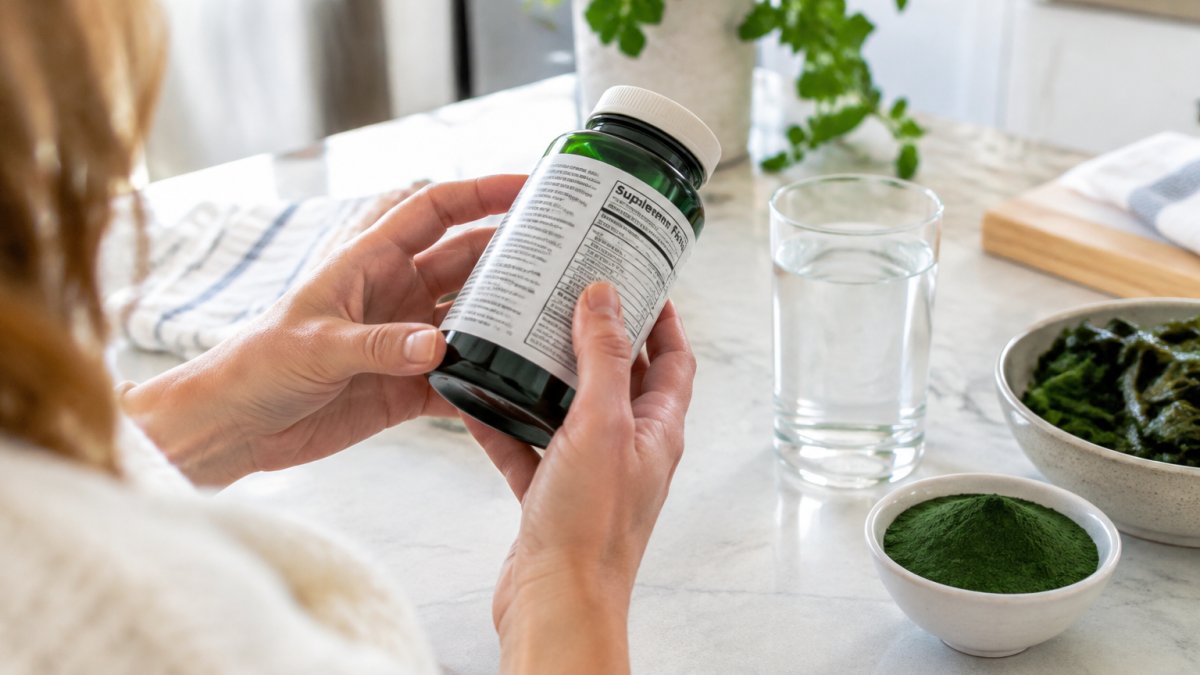
Finally, look at the source and the strain. As we tell our own customers, a producer should know exactly which strains it grows and whether real ocean water is used. A pond-grown product with unidentified strains tells you little about purity of any kind, gluten included.
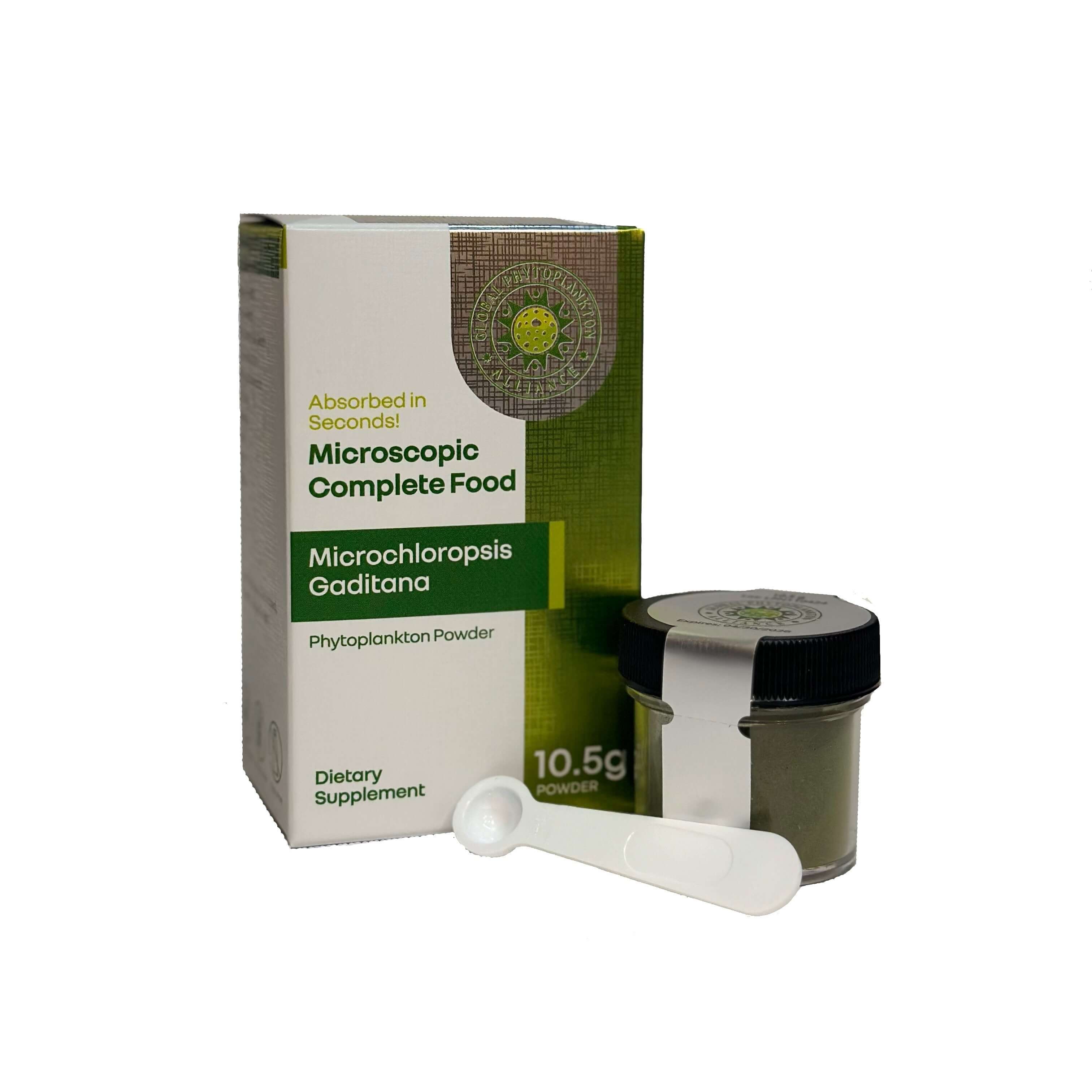
To see what full ingredient and allergen transparency looks like, you can review the Microchloropsis Gaditana supplement.
Marine Phytoplankton vs Spirulina: Gluten and Nutrition Compared
Both are gluten free in pure form, so nutrition is what separates them.
Spirulina is a cyanobacteria. Marine phytoplankton is a marine microalgae that forms the base of the ocean food web. Marine phytoplankton supplements from Global Phytoplankton provide omega-3, 6 and 9 fatty acids including EPA, complete protein with all essential amino acids, vitamins A, B-complex, C, D and E, and minerals including iron, magnesium and zinc.
| Feature | Marine Phytoplankton | Spirulina |
|---|---|---|
| Gluten in pure form | None | None |
| Position in food web | Base food source | Derivative organism |
| Omega-3 content | Yes, including EPA | Limited |
For a deeper look at how whole food supplements compare on nutrient delivery, our guide to whole food supplement benefits covers the nutritional case in more detail.
If you have celiac disease, treat any supplement purchase as a label-reading exercise first.
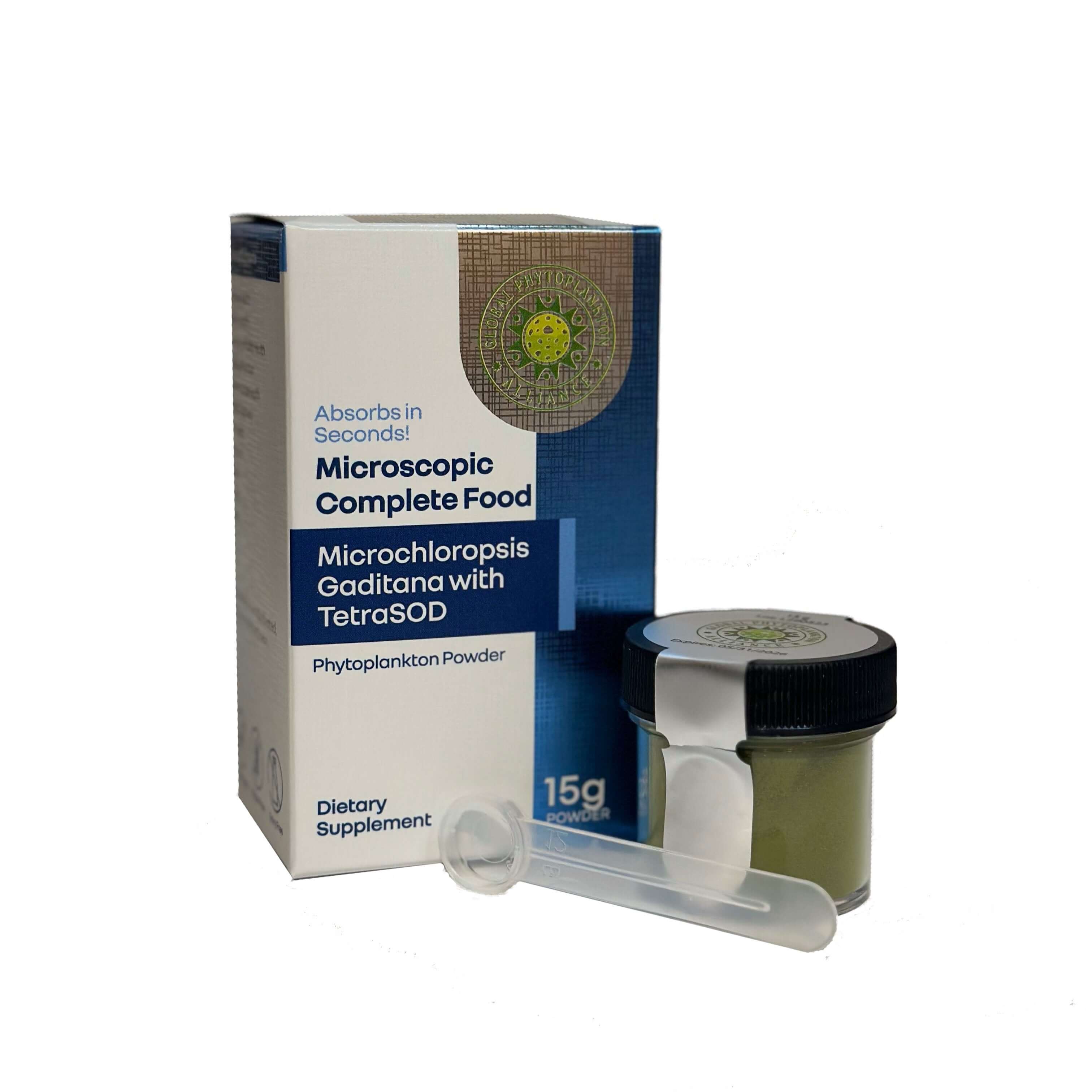
If you want the antioxidant-enhanced option, the Microchloropsis Gaditana with TetraSOD supplement combines the base product with TetraSOD, a source of superoxide dismutase.
Reading a label carefully is the difference between a supplement that fits your diet and one that quietly doesn't. Global Phytoplankton grows 100% raw, vegan, whole-food marine phytoplankton in pharmaceutical-grade facilities, keeps it naturally free of gluten and allergens, and offers formulas with TetraSOD for antioxidant support. Get started with Global Phytoplankton and give your cells nutrition you can actually verify.
Frequently Asked Questions
Is marine phytoplankton naturally gluten-free?
Yes. Marine phytoplankton is a single-celled marine microalgae, and gluten is a protein found in wheat, barley, and rye, so the organism itself contains no gluten. The risk comes from the finished product: capsules, binders, flavourings, and shared production lines can introduce gluten. Check the ingredient list and look for a gluten-free certification on the label before you buy.
Can marine phytoplankton supplements contain gluten?
They can. A gluten-free marine phytoplankton supplement depends on the full formulation, not just the algae. Excipients such as maltodextrin, certain starches, and some capsule materials may contain gluten, and a facility that also handles wheat-based powders creates cross-contamination risk. Choose products that state gluten-free status on the label and list every ingredient clearly.
What are the possible side effects of marine phytoplankton?
Because it is a marine source, anyone with shellfish or seafood allergies should check with a healthcare practitioner first.
